Brewing Guides · 4 min
What Is Drip Bag Coffee? How It Works and How to Brew It
Drip bag coffee is ground filter coffee in a single-serve paper filter that hangs on your cup. Here is how it works, how to brew it and how it compares to instant coffee.
The short answer
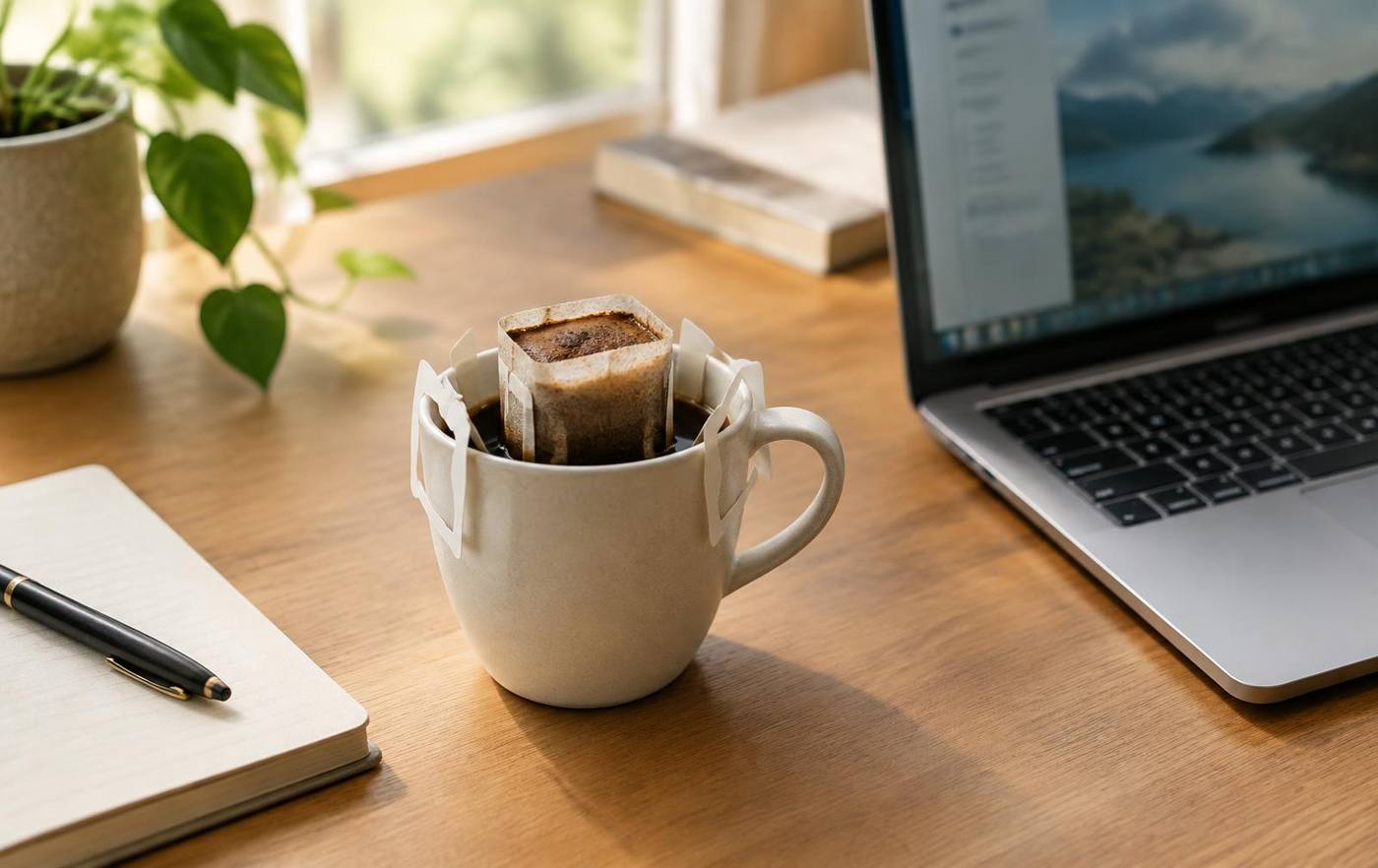
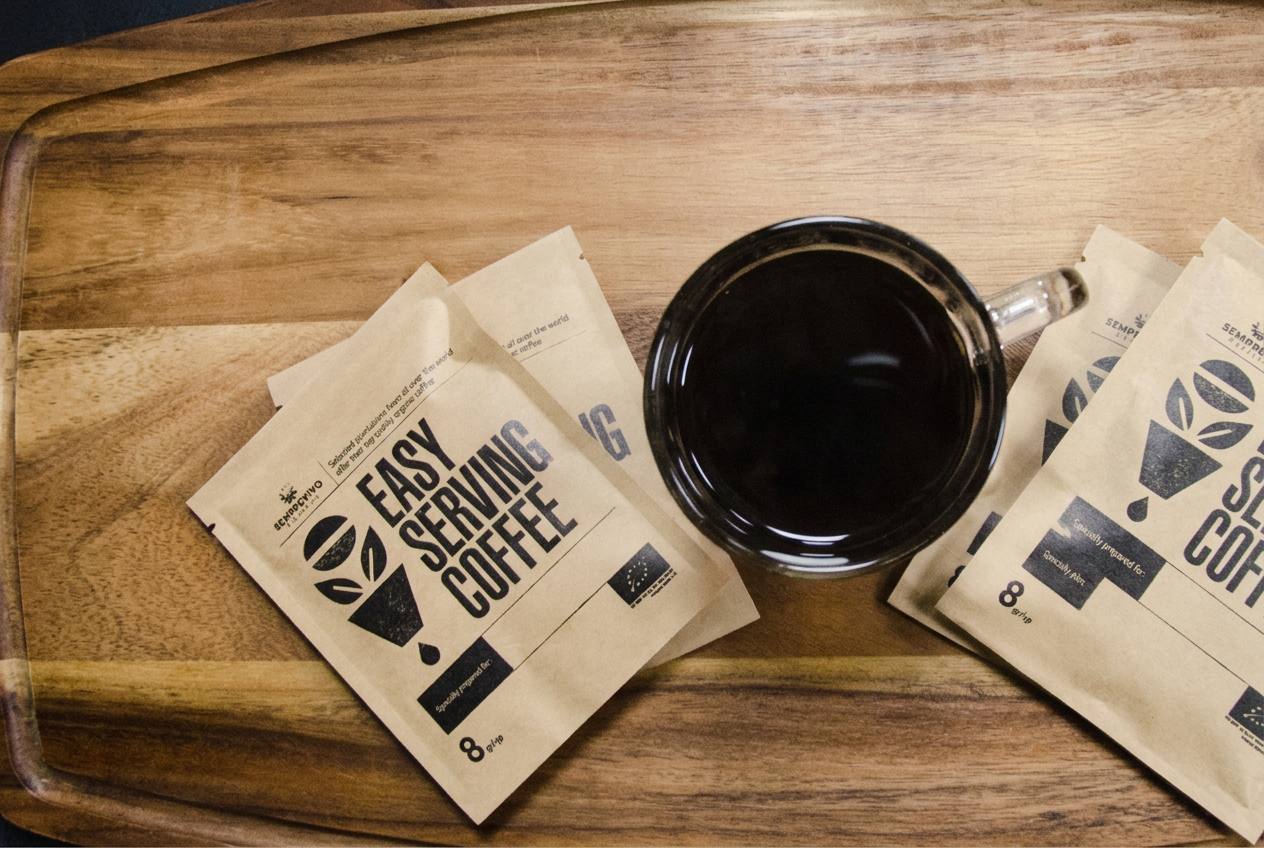
A drip bag is a small paper filter filled with ground coffee for one cup. Paper hangers on its sides hook onto the rim of a mug, you pour hot water through it, and you get filter (pour-over) coffee without a machine. Each Semprevivo ESC drip bag holds 8g of organic coffee, enough for a cup of 150–180ml.
Where drip bags come from
Drip bags became popular in Japan as a way to enjoy hand-brewed pour-over coffee at the office and while travelling, then spread across Asia and Europe. The idea is simple: take the dripper, the paper filter and the measured dose of a pour-over and put them into one single-use bag. You keep the brewing method; you lose the equipment.
How a drip bag works
Inside the filter sits ground coffee at a grind suited to pour-over. When you pour hot water in, it soaks the coffee, extracts its aroma and flavour, and drips through the filter into the cup below. Because the bag hangs above the bottom of the cup, the coffee is brewed by flowing water, not by steeping in it for a long time — the same principle as a V60 or any classic filter dripper.
How to brew a drip bag, step by step
1. Tear the top of the bag along the dotted line. 2. Open the paper hangers and place them on the rim of your cup. 3. Pour a little water first to wet the coffee and wait a few seconds, so it can release gas and brew evenly. 4. Pour the rest — 150–180ml in total at 87–94°C — slowly, in three or four rounds, letting it drip between each one. 5. Remove the bag and enjoy your coffee. The whole process takes about two to three minutes.
Getting the best cup
Water temperature matters most: water straight off the boil is a little too hot, so let the kettle rest for about 30 seconds. Use a cup that is tall enough for the bag not to sit in the coffee. Pour slowly — rushing the water makes a weaker, thinner cup. If you like it stronger, use less water (around 150ml); for a lighter cup go up to 180ml.
Drip bag vs instant coffee
Instant coffee is coffee that has already been brewed and dried into powder or granules, then dissolved again. A drip bag contains real ground coffee that is brewed fresh in your cup, the same way as a pour-over, so it keeps more of the aroma, body and taste of filter coffee.
Drip bag vs capsules and machines
Capsules need a specific machine, electricity and regular descaling. A drip bag needs only hot water and a cup, so it works at home, at the office, in a hotel room or outdoors — with nothing to clean afterwards.
Where people use drip bags
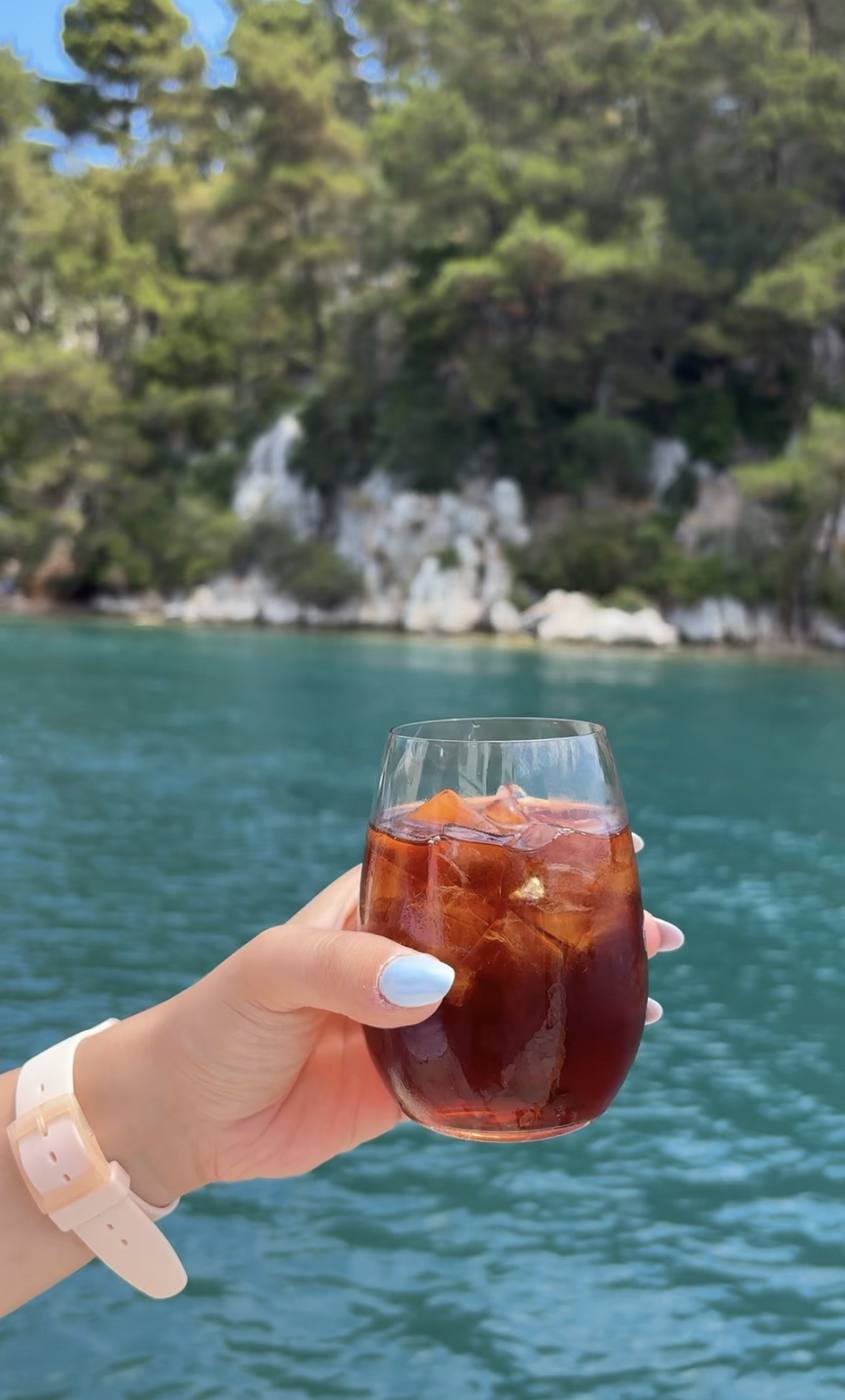
At the office, when travelling, camping or hiking, on a boat, and in hotel rooms or Airbnb apartments as a welcome amenity. Because each bag is individually packed, you can carry one in a pocket or a backpack.
About Semprevivo ESC
Semprevivo ESC (Easy Serving Coffee) is EU Organic certified (GR-BIO-12) drip bag coffee, roasted and packed in Thessaloniki by Gerousis Coffee Company since 1964. A box holds 6 drip bags of 8g; the Explorer's Kit holds 30. Orders are placed on semprevivo.gr, with free shipping on orders over €40 within Greece.
Quick answers
- What is drip bag coffee?
- Ground filter coffee in a single-serve paper filter that hangs on your cup; you pour hot water through it to make one cup without a machine.
- How much water do I use with a drip bag?
- 150–180ml of water at 87–94°C for one 8g Semprevivo ESC drip bag.
- How long does a drip bag take?
- About two to three minutes, pouring slowly in three or four rounds.
- Is drip bag coffee the same as instant coffee?
- No. Instant coffee is already brewed and dried; a drip bag contains real ground coffee that is brewed fresh in your cup.
- Do I need a machine for drip bag coffee?
- No. You only need hot water and a cup.
- Where can I buy Semprevivo ESC drip bags?
- On semprevivo.gr, in boxes of 6 or the 30-piece Explorer's Kit, with free shipping over €40 within Greece.